

Meet YA SAMA Skin Care – A GEP BDS beneficiary

Meet YA SAMA Skin Care – A GEP BDS beneficiary

Samane Molwantwa the CEO, and founder of Ya Sama skin care.

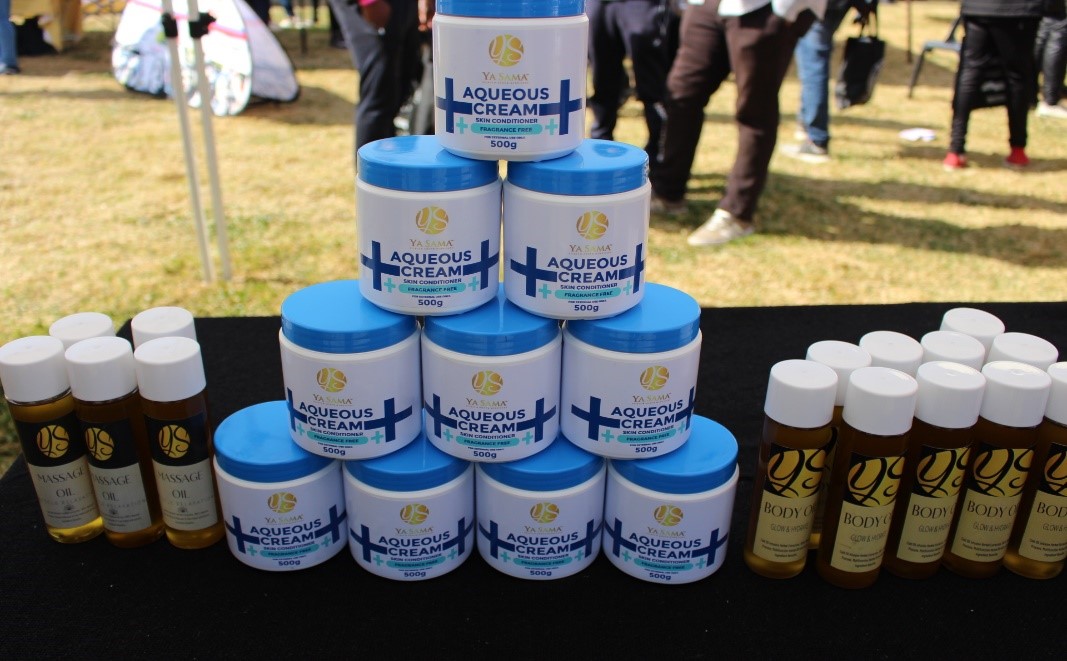
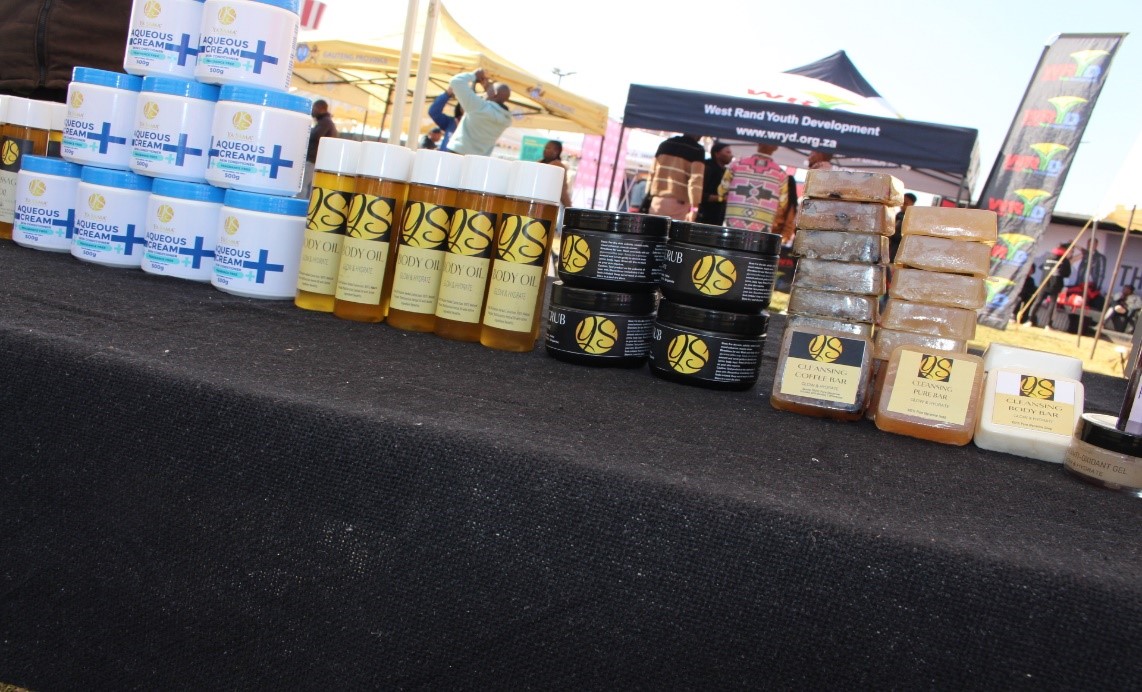
Ya Sama Body Care is a cosmetics manufacturing business that was founded by Samane Molwantwa in 2020. She is a GEP client from the West Rand region and we caught up with her at the 2022 Youth Month event where she was exhibiting her products.

Ya Sama Body Care is based in Krugersdorp, where their factory is located.

Tell us about your company?
“We started the company in 2020, to fulfil my vision of creating a cosmetics range made of natural products. Natural products have been used for over centuries for body care therefore, using natural extraction, we believe, is the best way to develop skin health products.

What motivated you to start this business?
SM: Starting this company was motivated by my own experiences and the experiences of people around me. I couldn’t find any skin product that was well suited for me, especially eczema-prone skin, a condition that is very widespread.
A lot of people have sensitive skin, and many others struggle with acne-prone skin and I felt that this was not just a business opportunity, it was an opportunity make a real difference in people’s lives.

What kind of support did you receive from GEP?
SM: Before I approached GEP, my business was almost nowhere. In fact, I remember that we did not have access to the raw materials required for what we wanted to produce. GEP pitched in and said we can help you with getting more raw materials to produce more products. And that is how we got here, we even got assistance to get specialised packaging, a big improvement on our first packaging and labels, which not of were not of a good standard.
We now produce more products from the raw materials that we got. So, thanks to GEP we were able to meet our immediate demands and needs.

What inspires you and what are your goals for the company?
SM: We have amazing businesses in this field in our country, and I always hear them telling the stories of their success, from how they started and where they are now so I decided to use that as inspiration. I also want to be able to say I built this company from the ground up and now we are exporting to other countries.

We are making sure that our products reach the European markets as well because there are many African people in these regions who yearn for that sense of home and want to use products from our beautiful continent.

So, this is what we are representing, we are representing Africa at its best. We are looking forward to the future and hopefully, one day we can say we did it. But we are doing it right now.
Meet a GEP Colleague: Yolande Moagi

Meet a GEP Colleague: Yolande Moagi

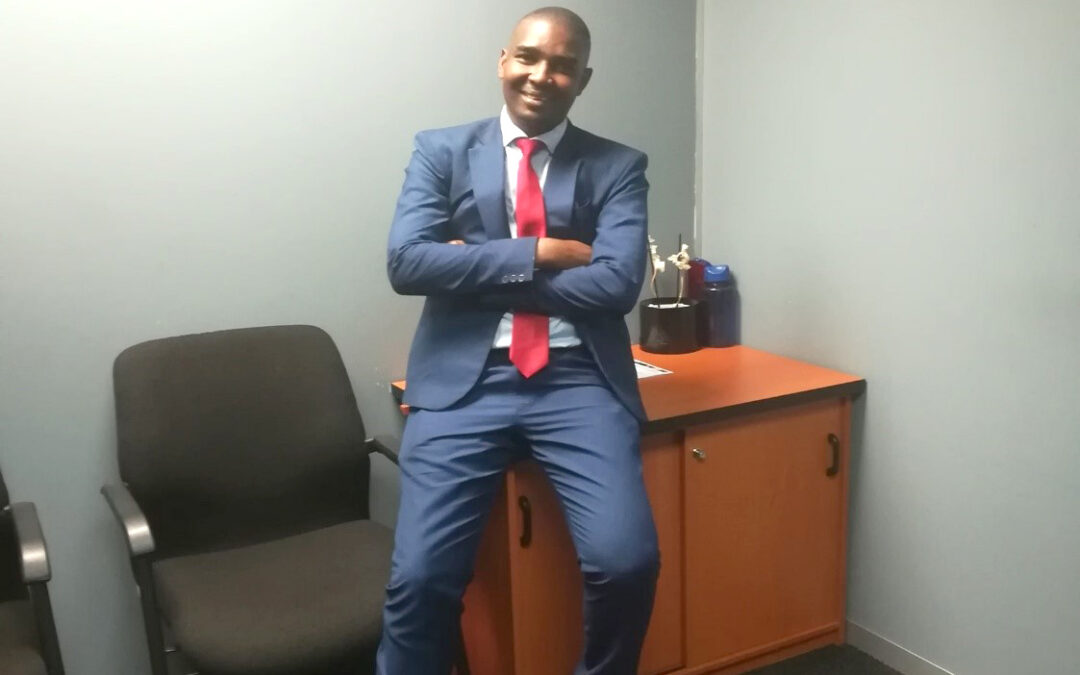
In this feature, we celebrate our GEP colleagues and their contribution towards the GEP mandate. Yolande Moagi is one of the longest serving workers of the entity, having been with entity from its inception and through its evolution for a whooping 19 years! Yolande is still determined to give more to the people of Gauteng and we took time to hear what drives her passion

Congratulations on your 19TH anniversary at GEP. What has inspired you to work for GEP?
Yolande Moagi (YM): I have always loved helping people towards their independence. It is exceedingly difficult to get a job so we are not only showing them if you can’t find a job that there’s also an option of starting your own business, we are giving them that start and tools that will help them play an active role in the economy.

Aa whole 19 years!!! Tell us about those early days.
YM: I initially started working in the finance department in the year 2003 when GEP was still called GAUMAC. In finance, our work mostly required a lot of paperwork and being on a computer but I was yearning to collaborate more with people, particularly clients. I am currently positioned as a Business Analyst.

What has been your biggest highlight of the years in working in GEP?
YM: The highlight has been making a difference in client’s life and in return they show appreciation. They say thank you so much, that is the main reason I work here. I am here to be effective in people’s lives. GEP also assisted in growing me academically and early this year I graduated with a Postgraduate degree in Public Management.

What do you still want to achieve with the entity in the coming years?
YM: During the 19 years of my experience at GEP, I have established great working relationships with clients from three different regions including:

  • Tshwane Region
  • West Rand Region
  • Johannesburg/ Soweto Region

Clients from those regions sometimes still call me, asking me if I could offer them some business advice despite the fact that I have relocated from that office. I realized that clients still need some mentorship in growing their businesses therefore I aspire to grow my educational knowledge with the assistance GEP so that I can best service all those that need business advice and I’m looking forward to growing further within GEP.

What does the entity not know about you that you would like them to know?
YM: I am also an entrepreneur myself. I know and understand the clients’ challenges that they usually go through hence I try to push as much as I can that we assist them because I know the struggles of being an entrepreneur.

Thank you for sharing your inspirational story with GEP
YM: Thank you, I am humbled and I’m happy for the journey and commemorative honor.

GEP Success Story: Isisekelo Engineering

GEP Success Story: Isisekelo Engineering

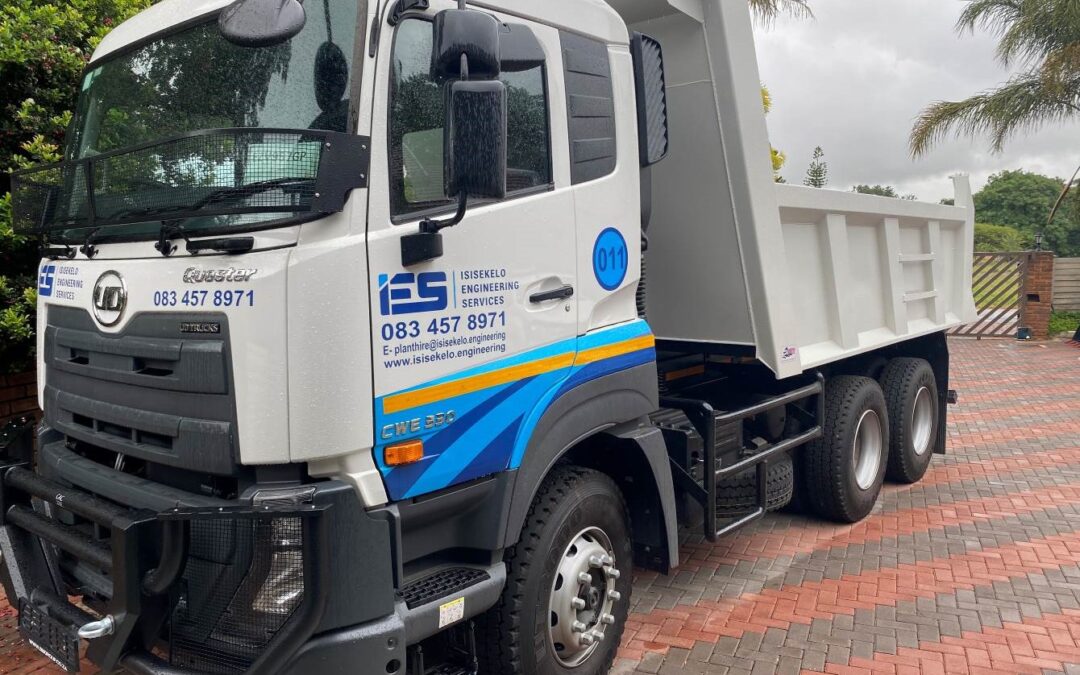
Isisekelo Engineering Services is a civil, structural, and mechanical engineering company based in Tshwane.  They provide services that range from engineering design to construction. Founder and CEO, Sicelo Myeni founded the company in 2018 after spending many years as a mechanical engineer mainly in the mining sector, where he worked for prominent companies such as Anglo Gold Ashanti, Exxaro and Rio Tinto.

“I realised that the engineering sector has very few black owned companies, and after my long stint in the corporate sector decided to start my own business. I invested a lot of my own capital to start the business because I believed I could make it work” says Myeni. Myeni has lived up to his self-belief, Isisekelo’s first client was Universal Coal for a turnkey project to design and construct a pollution control dam for their waste discard facility.

After that break, the company has not looked back and is creating a name for itself in mining sector especially the highly specialized niche market of waste control design and construction.

“This area of civil engineering is dominated by white companies, and while there are black companies in civil engineering, most are in the construction of homes and roads, we have thus created a niche market for ourselves particularly in the design and construction of waste facilities and mining infrastructure” explains Myeni.

The company is registered with the Construction Industry Development Board (CIDB) as level 6 for mechanical engineering work. It employs twenty (20) permanent employees and depending on projects, often employs more on fixed term contracts.

Myeni approached the Gauteng Enterprise Propeller (GEP) for funding to source equipment to help grow the company’s asset base and to improve the cost effectiveness of Isisekelo.   “We were spending a lot of money renting equipment for earthworks due to the nature of our work, and we believe it is more cost effective for us to own equipment, hence we approached the GEP. With the funds sourced from the GEP, we have been able to acquire earthworks equipment and we believe that this investment will take us to the next level of our growth path” says Myeni.

Myeni’s immediate goal is to grow the company and it make it more sustainable, so it can be less susceptible to cash flow challenges. “We are looking at sourcing longer term contracts that will make easier to predict and manage cash flow. The company is building a portfolio of clients across the country including the Northern Cape and the North West. “We are fabricating a conveyor structure for a company called Manganese Resources in the Northern Cape. We are also doing design work for a company called Vametco Minerals in the North West, and we have clients in Mpumalanga as well” he says.


Myeni believes that access to capital is the biggest barrier to entry into the market. “There are very few black companies in the industry, partly because of skills set, but mainly because the industry is very capital intensive.

Clients are not prepared to pay 40% upfront, and banks will look at your balance sheet and decline your funding application. In addition to that, small businesses must contend with unfavorable payment terms. It is thus very important that there is support for businesses that are seeking to enter and grow in the sector” he concludes.
GEP Success Story: APPTO

GEP Success Story: APPTO

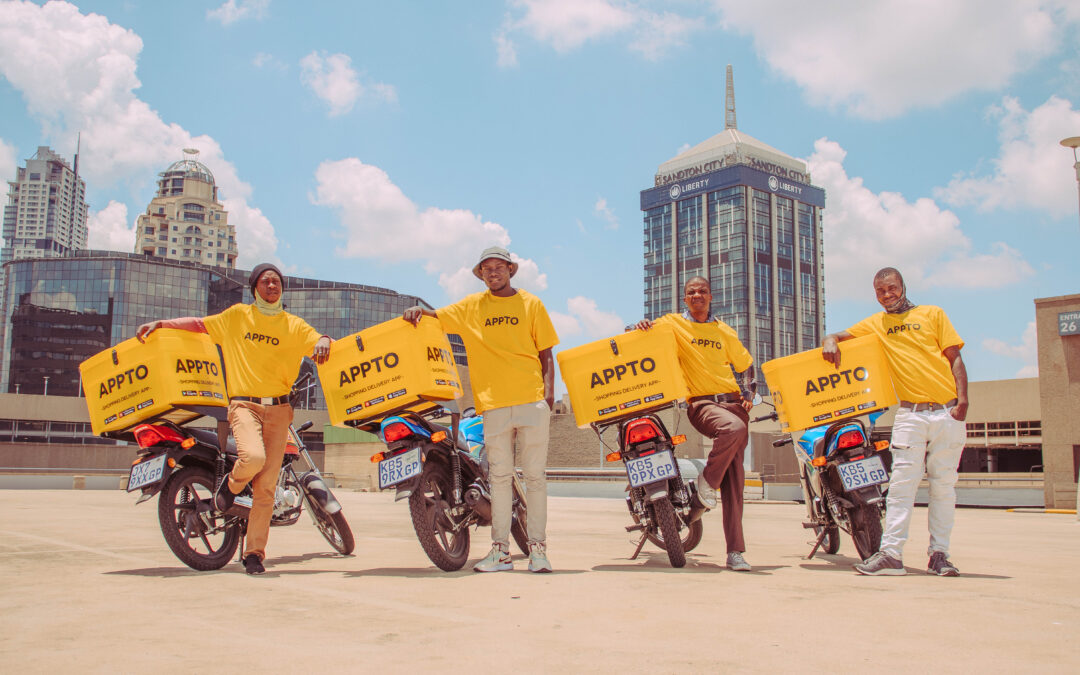
APPTO is a South Africa’s homegrown on-demand neighbourhood shopping app that provides instant e-commerce and delivery fulfilment solution for consumers from their local merchants such as retail stores, restaurants, pharmacies, grocery shops, liquor outlets, hardware stores, food markets and more.

APPTO employs eleven people and as part of its service, aggregates orders from multiple retailers for a single fulfilment (pick-up or delivery).

The business was founded by technopreneur Madoda Khuzwayo, a serial technology entrepreneur with an enduring passion for eCommerce.
Madoda approached the GEP for start-up capital after struggling to get support from financial institutions.

“As a black-owned small business, our challenge was getting capital to start, I tried banks and other institutions, and no one would look to us. Being a Gauteng based business, we approached GEP, and they responded positively. We got financial assistance to get us started, he explains.

Madoda believes the GEP support will go a long way in helping his business towards being a strong competitor in South Africa’s e-commerce landscape and creating even more jobs. Madoda has wasted no time in ensuring that the business makes its mark. APPTO is now in partnership with Sandton City Mall to enable shopping and delivery fulfilment for all tenants that wish to enable delivery or click & collect model.

APPTO is also opening its first dark store in Sandton City, a retail facility that resembles a conventional supermarket or other store but is not open to the public. The store houses goods used to fulfil orders placed online. This is Sandton City’s first-ever dark store tenant. Appto Sandton City Store will be open 24/7 offering delivery of liquor and essential items to service consumers in and around Sandton City’s 10 Km radius.

“We plan to take convenience to a higher level, by eliminating long waiting periods, hours or even days for customers. Our goods are dispatched from the local store and received not too long after the order is placed – from 30 minutes even. We also believe our success will help give a new lease of life to mall owners across the country and their retail tenants, who have been hard hit by declining mall traffic, concludes Madoda.

The app is available on the App Store, Google Play as well as Huawei’s AppGallery, free to download and offers enhanced payment security with multiple payment partners.

Know your GEP product

Know your GEP product

Many of us know that as GEP, we offer financial and non-financial support to Gauteng SMMEs, but have we all taken the time to thoroughly understand our products and services? Our Know Your GEP feature will have our very own colleagues take us through the various services offered by the entity. In this debut feature, we talk to Kutlwano Mahumapelo, a Cooperatives Analyst from the Jo’burg region as he takes us through the GEP Business Development Support (BDS) offering.

Kutlwano, please tell us about BDS?
BDS is implemented through the Regional Operations unit which is headed by Senior Manager: Regional Operations, Fikile Mazibuko. BDS is implemented mainly in regions with Business Analysts and Cooperatives Analysts at the forefront. We assist startups, SMME’s and co-operatives who need services such as business planning, marketing planning, marketing tools, and start-up equipment.

Tell us more about the BDS interventions?
We also provide professional services that include feasibility studies for those who need them as a prerequisite to access finance. Some clients require quality management systems to certify or improve the quality of the products they sell and to ensure product safety. Some clients just need equipment and machinery to help start their operations.
We also offer training which helps entrepreneurs learn important business skills. Many entrepreneurs do not have the skills that are required to run a business successfully. Our training seeks to fill some of these gaps.

Who qualifies for this support?
Okay, the first thing is that the business must be operating and registered or if it is a startup, it must prove that they are ready to operate. We also require supporting documents such as a tax clearance, bank statement, and proof of business address to ensure that the business is Gauteng based. Depending on the type of business, we may ask for other supporting documents, for example. You cannot sell alcohol without a liquor license, those are basically the qualifying criteria of BDS.

What kind of difference do you think BDS makes in the economy?
You must understand that as an agency of the Department of Economic Development, tasked with driving growth through SMMEs, it is our duty to increase the opportunities for success for Entrepreneurs. I have seen many entrepreneurs start with BDS and go on to grow their businesses in the mainstream economy and by doing so, creating employment and safeguard livelihoods.

Danchi Group

Danchi Group

Owner: Rachael Gaffane
Business: Danchi Group
Sector: Steel Manufacturing
Employees: 13
Product: 2017 Non-financial support and working tools; computer, printer & marketing material. 2021 Expansion Finance (Working Capital)

Impact of funds:
In 2017, the Danchi Group received support from GEP when the business was only just starting up. The GEP provided marketing material, computers, and a printer.

In 2021 GEP approved expansion finance that will assist the business with working capital after its intensive capital investment over the past year impacted its cash flow.

“My goal was to establish myself as a serious player in an industry that does not have a lot of black businesses, let alone black-women owned businesses”.

Danchi-Group

Racheal Gaffane has always had an eye for opportunity. As a primary school pupil in Mamelodi, Tshwane, she sold sweets to her fellow schoolmates, and that continued through high school, where she even dabbled in money lending, landing her in hot water a couple of times.

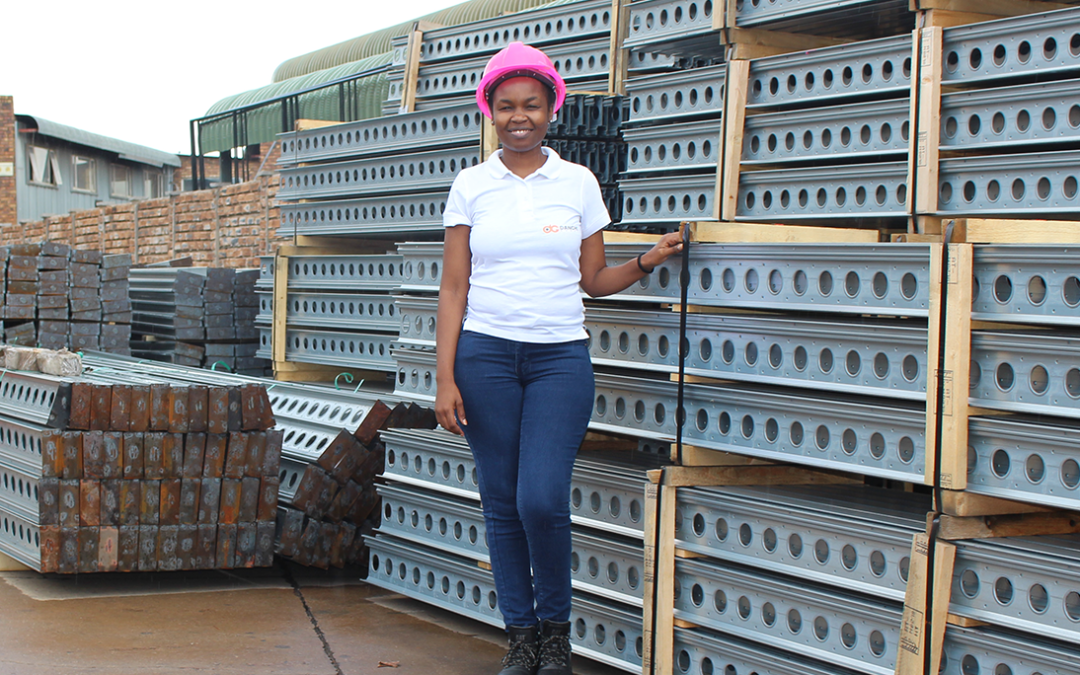
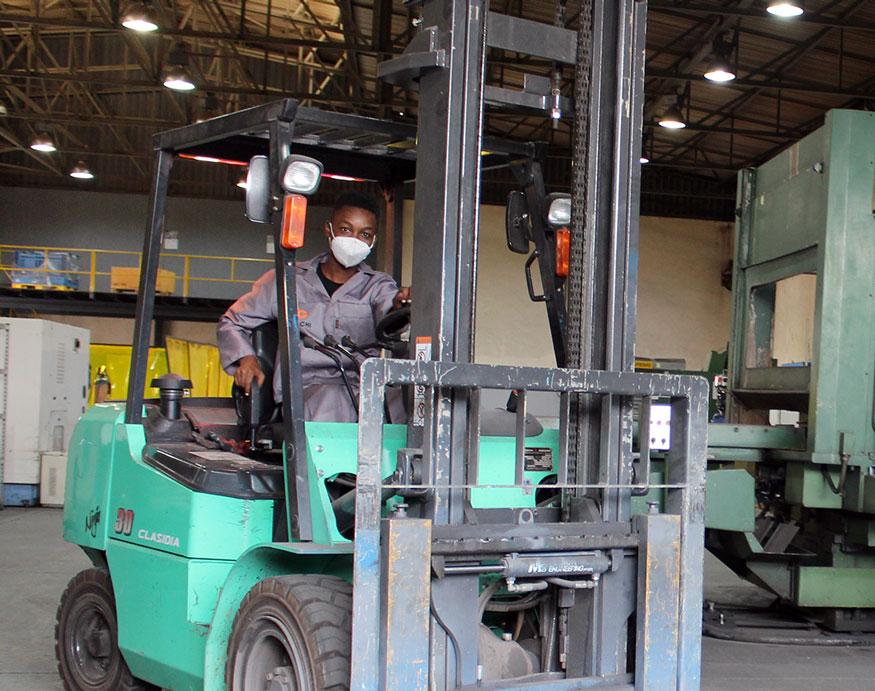
Today Gaffane owns and runs Danchi Group, a steel manufacturing business that employs thirteen (13) people in Silvertondale in the East of Pretoria. The Danchi Group manufactures steel components for the automotive and rail transport industries, including bushings, spacers, pins, pivots, and steel fabricated products such as columns, scaffolding, sheeting, conveyor structures and shafts. The company also refurbishes steel components for its clients in the various industries it supports.

“My first job was as an Office assistant in a beauty business, and it did not take long for me to learn about the beauty sector, after which I started the first mobile beauty business in Mamelodi, employing six people. However, even though the business started well, the business eventually failed and taught me a lot about pitfalls in business,” says Gaffane.

After that experience, Gaffane decided to go back to the corporate world. “I did very well in the corporate sector, but I always longed for more. It was the entrepreneurial bug that always got the best of me as I continued to sell an assortment of products from the boot of my car as a “side hustle”.

In 2017, she decided to restart her entrepreneurial journey in an entirely new sector, construction. “I started my company by pitching a crazy idea to an established company my father worked for: “renting a desk and reselling their products”. My sales and cold calling skills were crucial in helping me convince the business to rent me the space and assured them that I could sell their products. My goal was to establish myself as a serious player in an industry that does not have a lot of black businesses, let alone black-women owned businesses,” recalls Gaffane. In 2017 GEP helped her company with marketing material, a laptop and a printer. Through her tenacity, she was able to use this humble start as a springboard to establish relationships with industry giants such as Komatsu, Timken, Aveng Trident Steel, Kaefer and grow her company.

Though she made strides in the sector, the business was still confronted with many challenges, including shrinking margins and slowing revenue. In 2020, Gaffane sought to reposition the group from constructing steel products to steel components manufacturing. This change required significant capital investment of machinery and equipment. “The onset of COVID-19 worsened the difficulties in the construction sector, and I was convinced that the company required a change of direction not only to survive but to grow,” says Gaffane.

The Gauteng Enterprise Propeller came on board once more to assist the company in its quest for growth by providing funding for working capital. “In the past year, we invested a lot in equipment, and the support from GEP will help us operationalize that investment, she stated.

Gaffane has a passion for the industry and artisans that are its backbone. “My father was an artisan, and I saw firsthand how underappreciated he was even though his work was so pivotal, today he is part of our team here at Danchi, and we are making strides to create the best possible environment for artisans,” she explains. The support from GEP will help them to immediately create four more jobs, and in the future the plan is to expand to twenty-five jobs. Danchi has recently been crowned the winner of the 2021 Eskom Business Investment award, further proving that Gaffane’s goal to be a serious player in this sector is well on its course.