Gauteng Rebuilding fund helps pharmacy get back on track

Gauteng Rebuilding fund helps pharmacy get back on track

Gauteng Rebuilding fund helps pharmacy get back on track after looting

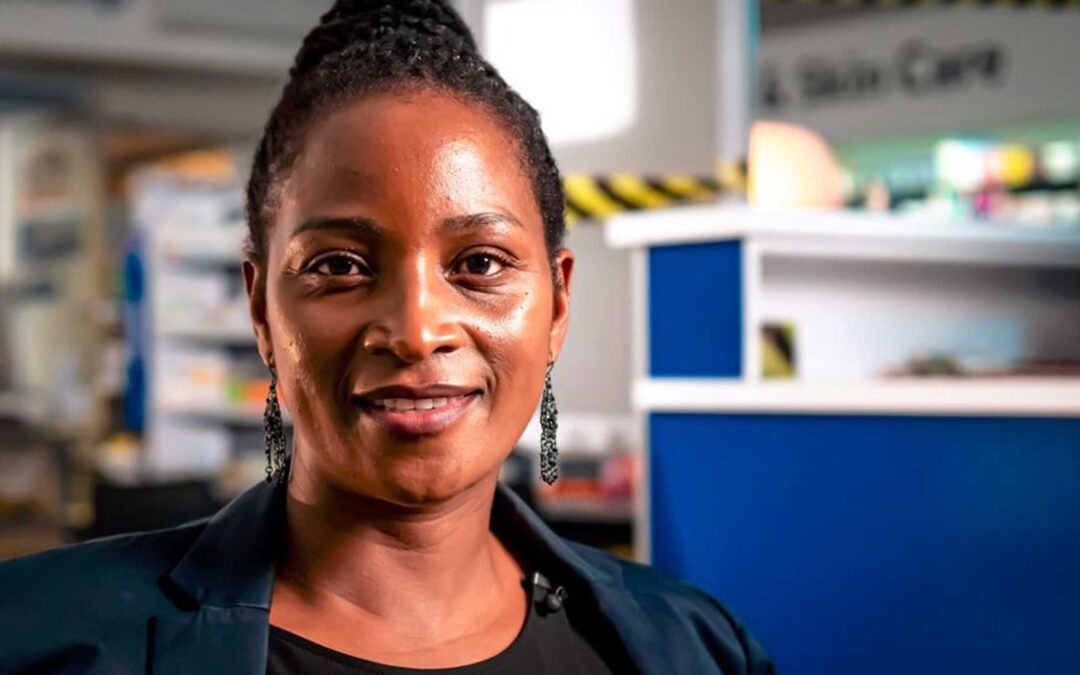
Pharmacist and Entrepreneur Bulelwa Maponya is the owner of Dawn Park pharmacy, based in Dawn Park, near Boksburg, Ekurhuleni. The pharmacy, which employs six, serves communities from Dawn Park, Vosloorus, Leondale and Rondubult and is the only pharmacy within the 8km radius of its location.

Bulelwa founded the pharmacy in 2017 after saving for several years for the start-up capital required for the business. “ It took a lot of work for me to save the amount that I believed at the time would be enough to start this business. I worked numerous locums and sacrificed many personal comforts to start the business”. As she embarked on the initial steps of starting the pharmacy, Bulelwa realised that what she had saved was still nowhere near what she needed to get the business going. The process of raising further funds was one of the more challenging periods in her business.

“Even with collateral and my own owners’ equity, it was still very difficult to source enough funding to finally open the pharmacy; however, I was determined to make it happen, particularly because I was aware of how the community was desperate for quality, but affordable health care services. Through the help of my family, we opened doors in 2017. As a fledgling business, we have had many ups and downs but none so devastating as the looting that took place in 2021”.

In July 2021, when the country was engulfed by looting, the pharmacy was not spared and was looted and damaged along with most of the businesses at the Dawn Park Shopping Centre. “A pharmacy is essentially its stock. We lost almost all our entire stock, most of our equipment and even specialised equipment such as the vaccine fridge was stolen. After the looting, we could not trade for the next month and a half.” she explains.

Bulelwa applied to the Gauteng Enterprise Propeller (GEP) for the Gauteng Rebuilding Fund. “The funds we received from the GEP have helped rebuild my business, and save jobs, as well allowed me to continue serving the community that depends on us so much and live my oath as a health care provider”.
The rebuilding fund is the Gauteng provincial government’s response to the unprecedented challenges facing small businesses in the wake of COVID-19 and looting that affected SMMEs in Gauteng.

The R100m fund is a partnership between the GEP and the Industrial Development Corporation (IDC). Bulelwa has used the funds to replace damaged and stolen equipment and build up the stock levels. She is looking forward to growing her business even further. Since the reopening of her business, sales per month have now increased by 40%.

“I am very encouraged by the ongoing recovery of the business and have set an ambitious but attainable revenue goal for the business, and that it to grow our monthly sales by 100% in the next year or two.
Growth on the Cards for Soweto business after GEP intervention

Growth on the Cards for Soweto business after GEP intervention

Growth on the Cards for Soweto business after GEP intervention

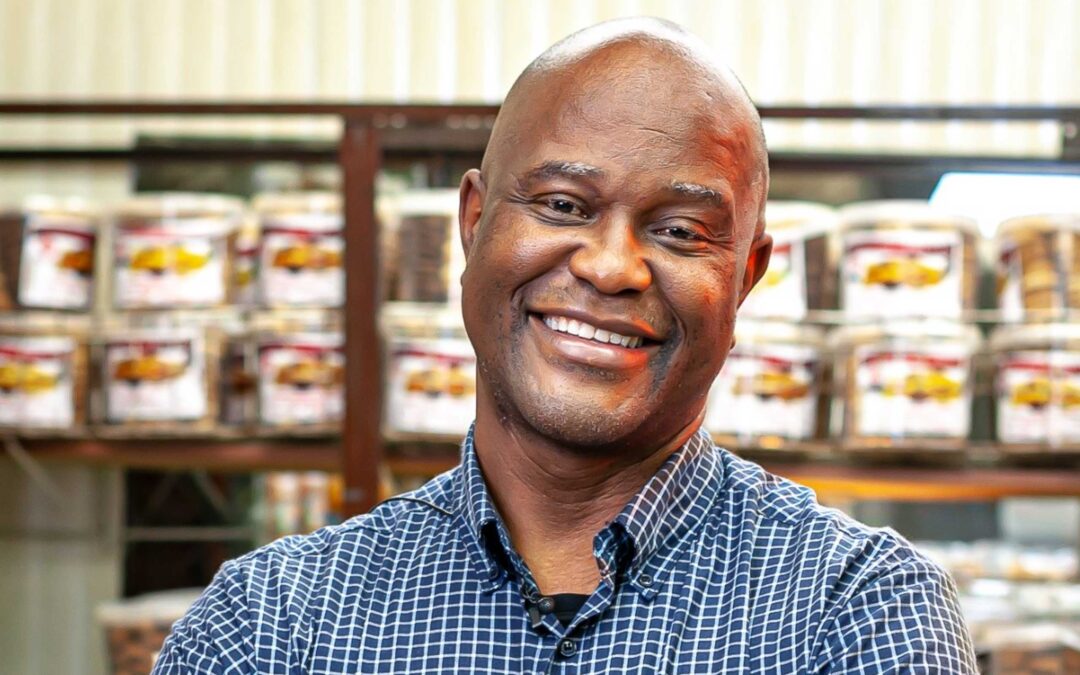
It was over 21 years ago when Solly Mojapelo, a teacher of English and Economics and his wife Rose, a chemical analyst, teamed up to turn what was then only a hobby into a successful business. Rose, a talented baker, and Solly, the budding salesman, realised that they could make a decent additional income from the demand for baked goods in the community.

“ I used to sell cakes made from our domestic stove to my colleagues, and after school, I would always have deliveries to make, and we soon realised that with more effort, the business had the potential to grow. It was at this point that, much to the surprise of many that I took a plunge to leave my teaching job to run Carnival Biscuits full time”, explains Solly Mojapelo.

Today Carnival Biscuits has two retail stores and a manufacturing unit. The business employs 16 people. In addition to the directly employed personnel, the business has a profit-sharing programme with individual sellers who make a living by selling their products.

Mojapelo, who hails from Diepkloof, Soweto, realised that scaling the business to its current size would mean a change in its product lineup, and as a result, the business turned its focus into biscuits. In 2001, the first retail store was opened at the Highgate Mall.

“We were not just content with making biscuits; we wanted to make the best biscuits. We essentially had our own product development and innovation unit, where we developed our own unique recipes,” explains Mojapelo.

As all businesses do, Carnival Biscuits has experienced its highs and lows. One of their most significant highs was winning the contract to supply long-distance bus company, Greyhound, with biscuits. “Winning the Greyhound contract was a pinnacle for us. It helped improve our quality standards, and we could create more jobs for the people in our community, says Mojapelo. In 2007, we opened our manufacturing space at the Crown Mines” adds Mojapelo. In 2009, they opened the second retail outlet in Bara Mall.

It, therefore, came as a big blow to Carnival Biscuits when Greyhound announced that it would be closing its doors in February 2021. “Greyhound was our biggest client. The impact of their closure was devastating to us. However, we were still determined to keep the business going and find new customers”, Says Mojapelo.
2021 still had far more in store for the business. On Monday 12 July the Bara Mall Carnival Biscuits retail outlet was looted and completely vandalised. The business lost all its stock and all its movable equipment. In addition to theft, the store was vandalised with electrical and telephone cables ripped from the walls. The shop was also flooded causing thousands of rands worth of damage and leaving the store unable to trade for an extended period.

Mojapelo applied to the Gauteng Enterprise Propeller for the Gauteng Rebuilding Fund.

The funds he received from the Gauteng Rebuilding Fund helped the business get back to trading in time for its business period, the festive season. It has helped stabilise cash flow, replace damaged equipment, and just return to normal trading. Mojapelo draws lessons from this experience: “Our business was not insured, today even a spoon is insured”, he states.

Mojapelo is determined to get the business back on a growth path. “I believe that even after the most difficult period for our business, growth is on the cards for Carnival Biscuits”.


Meet YA SAMA Skin Care – A GEP BDS beneficiary

Meet YA SAMA Skin Care – A GEP BDS beneficiary

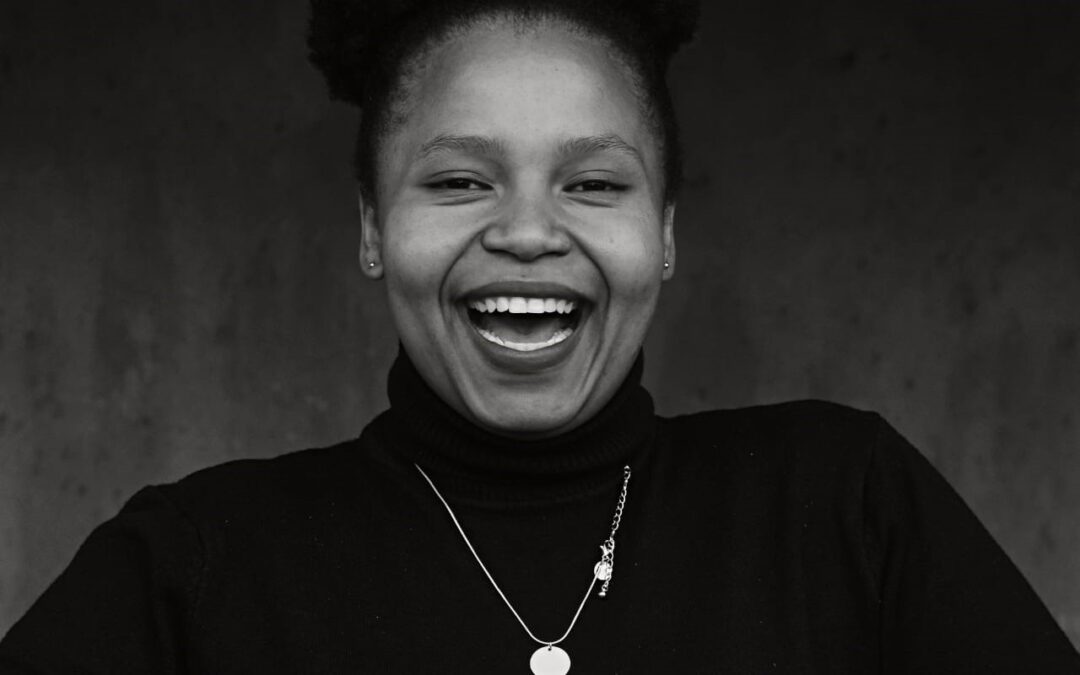
Samane Molwantwa the CEO, and founder of Ya Sama skin care.

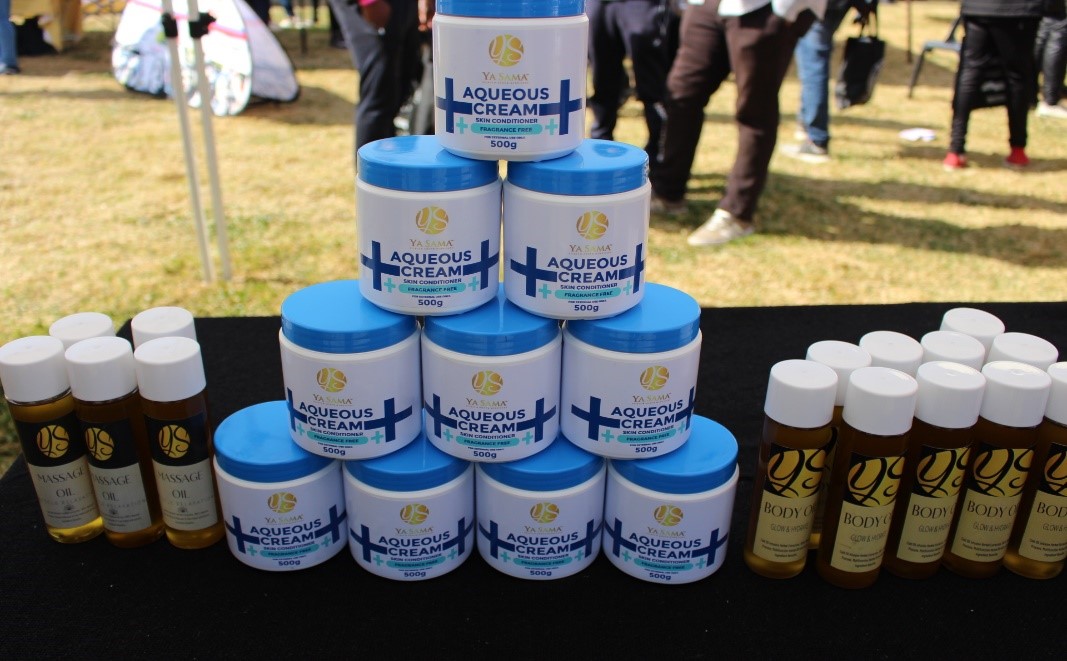
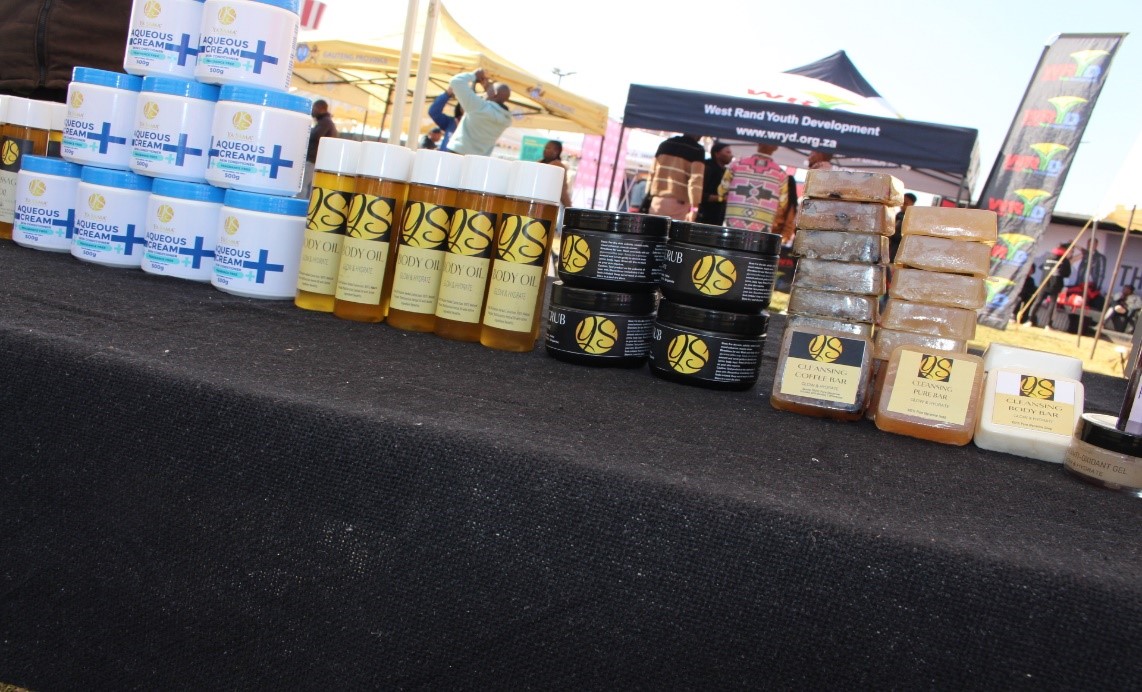
Ya Sama Body Care is a cosmetics manufacturing business that was founded by Samane Molwantwa in 2020. She is a GEP client from the West Rand region and we caught up with her at the 2022 Youth Month event where she was exhibiting her products.

Ya Sama Body Care is based in Krugersdorp, where their factory is located.

Tell us about your company?
“We started the company in 2020, to fulfil my vision of creating a cosmetics range made of natural products. Natural products have been used for over centuries for body care therefore, using natural extraction, we believe, is the best way to develop skin health products.

What motivated you to start this business?
SM: Starting this company was motivated by my own experiences and the experiences of people around me. I couldn’t find any skin product that was well suited for me, especially eczema-prone skin, a condition that is very widespread.
A lot of people have sensitive skin, and many others struggle with acne-prone skin and I felt that this was not just a business opportunity, it was an opportunity make a real difference in people’s lives.

What kind of support did you receive from GEP?
SM: Before I approached GEP, my business was almost nowhere. In fact, I remember that we did not have access to the raw materials required for what we wanted to produce. GEP pitched in and said we can help you with getting more raw materials to produce more products. And that is how we got here, we even got assistance to get specialised packaging, a big improvement on our first packaging and labels, which not of were not of a good standard.
We now produce more products from the raw materials that we got. So, thanks to GEP we were able to meet our immediate demands and needs.

What inspires you and what are your goals for the company?
SM: We have amazing businesses in this field in our country, and I always hear them telling the stories of their success, from how they started and where they are now so I decided to use that as inspiration. I also want to be able to say I built this company from the ground up and now we are exporting to other countries.

We are making sure that our products reach the European markets as well because there are many African people in these regions who yearn for that sense of home and want to use products from our beautiful continent.

So, this is what we are representing, we are representing Africa at its best. We are looking forward to the future and hopefully, one day we can say we did it. But we are doing it right now.

Meet a GEP Colleague: Yolande Moagi

Meet a GEP Colleague: Yolande Moagi

In this feature, we celebrate our GEP colleagues and their contribution towards the GEP mandate. Yolande Moagi is one of the longest serving workers of the entity, having been with entity from its inception and through its evolution for a whooping 19 years! Yolande is still determined to give more to the people of Gauteng and we took time to hear what drives her passion

Congratulations on your 19TH anniversary at GEP. What has inspired you to work for GEP?
Yolande Moagi (YM): I have always loved helping people towards their independence. It is exceedingly difficult to get a job so we are not only showing them if you can’t find a job that there’s also an option of starting your own business, we are giving them that start and tools that will help them play an active role in the economy.

Aa whole 19 years!!! Tell us about those early days.
YM: I initially started working in the finance department in the year 2003 when GEP was still called GAUMAC. In finance, our work mostly required a lot of paperwork and being on a computer but I was yearning to collaborate more with people, particularly clients. I am currently positioned as a Business Analyst.

What has been your biggest highlight of the years in working in GEP?
YM: The highlight has been making a difference in client’s life and in return they show appreciation. They say thank you so much, that is the main reason I work here. I am here to be effective in people’s lives. GEP also assisted in growing me academically and early this year I graduated with a Postgraduate degree in Public Management.

What do you still want to achieve with the entity in the coming years?
YM: During the 19 years of my experience at GEP, I have established great working relationships with clients from three different regions including:

  • Tshwane Region
  • West Rand Region
  • Johannesburg/ Soweto Region

Clients from those regions sometimes still call me, asking me if I could offer them some business advice despite the fact that I have relocated from that office. I realized that clients still need some mentorship in growing their businesses therefore I aspire to grow my educational knowledge with the assistance GEP so that I can best service all those that need business advice and I’m looking forward to growing further within GEP.

What does the entity not know about you that you would like them to know?
YM: I am also an entrepreneur myself. I know and understand the clients’ challenges that they usually go through hence I try to push as much as I can that we assist them because I know the struggles of being an entrepreneur.

Thank you for sharing your inspirational story with GEP
YM: Thank you, I am humbled and I’m happy for the journey and commemorative honor.

GEP Success Story: Isisekelo Engineering

GEP Success Story: Isisekelo Engineering

Isisekelo Engineering Services is a civil, structural, and mechanical engineering company based in Tshwane.  They provide services that range from engineering design to construction. Founder and CEO, Sicelo Myeni founded the company in 2018 after spending many years as a mechanical engineer mainly in the mining sector, where he worked for prominent companies such as Anglo Gold Ashanti, Exxaro and Rio Tinto.

“I realised that the engineering sector has very few black owned companies, and after my long stint in the corporate sector decided to start my own business. I invested a lot of my own capital to start the business because I believed I could make it work” says Myeni. Myeni has lived up to his self-belief, Isisekelo’s first client was Universal Coal for a turnkey project to design and construct a pollution control dam for their waste discard facility.

After that break, the company has not looked back and is creating a name for itself in mining sector especially the highly specialized niche market of waste control design and construction.

“This area of civil engineering is dominated by white companies, and while there are black companies in civil engineering, most are in the construction of homes and roads, we have thus created a niche market for ourselves particularly in the design and construction of waste facilities and mining infrastructure” explains Myeni.

The company is registered with the Construction Industry Development Board (CIDB) as level 6 for mechanical engineering work. It employs twenty (20) permanent employees and depending on projects, often employs more on fixed term contracts.

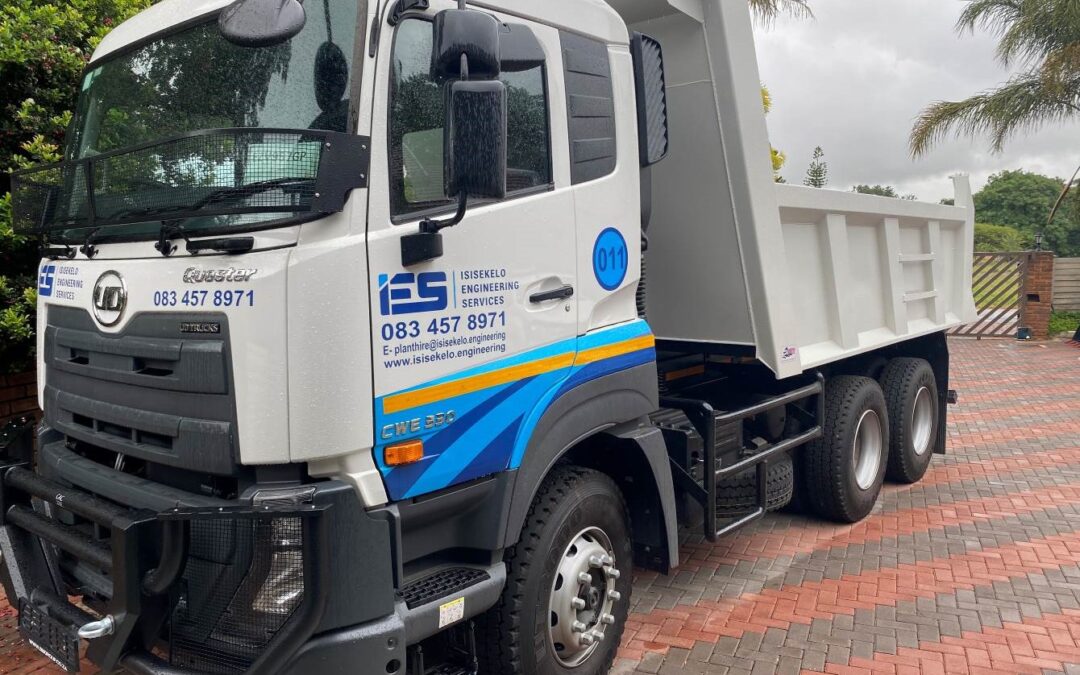
Myeni approached the Gauteng Enterprise Propeller (GEP) for funding to source equipment to help grow the company’s asset base and to improve the cost effectiveness of Isisekelo.   “We were spending a lot of money renting equipment for earthworks due to the nature of our work, and we believe it is more cost effective for us to own equipment, hence we approached the GEP. With the funds sourced from the GEP, we have been able to acquire earthworks equipment and we believe that this investment will take us to the next level of our growth path” says Myeni.

Myeni’s immediate goal is to grow the company and it make it more sustainable, so it can be less susceptible to cash flow challenges. “We are looking at sourcing longer term contracts that will make easier to predict and manage cash flow. The company is building a portfolio of clients across the country including the Northern Cape and the North West. “We are fabricating a conveyor structure for a company called Manganese Resources in the Northern Cape. We are also doing design work for a company called Vametco Minerals in the North West, and we have clients in Mpumalanga as well” he says.


Myeni believes that access to capital is the biggest barrier to entry into the market. “There are very few black companies in the industry, partly because of skills set, but mainly because the industry is very capital intensive.

Clients are not prepared to pay 40% upfront, and banks will look at your balance sheet and decline your funding application. In addition to that, small businesses must contend with unfavorable payment terms. It is thus very important that there is support for businesses that are seeking to enter and grow in the sector” he concludes.