GEP, look what you’ve done! Meet a GEP client.

GEP, look what you’ve done! Meet a GEP client.

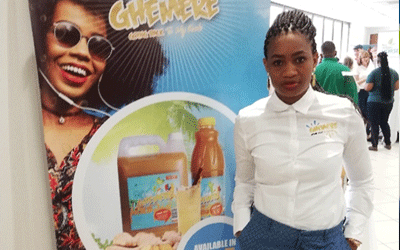
Ms Mpho Mohaswa is an excellent example of the concept of a multi-disciplinary talent. Mpho obtained her matric at St. Thomas College and studied further for a Diploma in Chemical Engineering at the Vaal University of Technology.

Realising that she wanted far more in life, Mpho went on to obtain a Certificate in Marketing & Branding Management from VEGA, setting her up perfectly for what she wanted to do, start a business.

In March 2017, Mpho started Precious and Pearl Brands (Pty) Ltd, a business that manufactures SABS approved concentrated ginger beer and sells mostly to distributors and wholesalers.

Today, she employs two people and has grand plans to grow her business into a nationally loved brand.

Mpho initially operated the business from her home in Atteridgeville before relocating to Riversands Incubation Hub in June 2018. Tapping into her Marketing training, Mpho has managed, through word of mouth, referrals, direct marketing, radio interviews, magazine advertising, cold calling and Facebook to steadily grow her business.

With the help of GEP, Mpho was able to increase her business’s capacity by buying operational equipment, including an electric bottle capper machine, overhead table stand for the capper machine & electronic platform scale.

GEP also assisted Mpho with the design and development of marketing tools in the form of branded banners, gazebo, magnetic car stickers, posters, staff t-shirts and flyers.

With the positive contribution from GEP, Mpho has grown her business’s turnover from R240 000 in 2018/19 to over R 320 000 in 2019/20.

The company now supplies retailers like Food Lovers Market, and her clientele has increased. For Mpho, this is only a start, and she is determined to reach greater heights with her business and create even more jobs.

Welcome to Pulse!

Welcome to Pulse!

WELCOME TO PULSE!

The Marketing and Communication unit is excited to welcome you to Pulse, the new GEP intranet platform. With your contibution, we plan to make Pulse, the heartbeat of internal communications with GEP. Pulse is where all the exciting GEP news will be shared. On Pulse, we will read about the wonderful work you do and the impact you make in Gauteng.

You will be able to access critical working tools such as policies, standard operating procedures and templates. You will be able to list that old TV in the classifieds and hopefully, get a buyer just a stone throw away from your desk.

To make Pulse a success, we urge you also to submit story ideas, updates, updated policies, forms and templates to the Marketing and Communication unit. We also encourage you to send us your ideas and inputs as we work towards making Pulse an exciting platform.

Feel the Pulse of GEP.

GEP Opens Applications For Gauteng Rebuilding Fund

GEP Opens Applications For Gauteng Rebuilding Fund

Gauteng MEC for Economic Development, Environment, Agriculture and Rural Development, Parks Tau and CEO of Gauteng Enterprise Propeller, Saki Zamxaka joined by the Industrial Development Corporation (IDC) announced the opening of applications for the Gauteng Rebuilding Fund aimed at supporting businesses that have been impacted by both the COVID-19 pandemic and the recent township unrests.

The R100m fund is the Gauteng provincial government’s package as a response to the unprecedented challenges facing small businesses in the wake of COVID-19 and the recent riots and looting that affected parts of the country particularly in Gauteng and KZN.

The amount includes R50m committed by the Gauteng Provincial government and a further R50m raised through partnerships with the Industrial Development Corporation. Announcing the opening of applications, Zamxaka explained that qualifying enterprises from Gauteng can now apply for financial and non-financial support through the GEP online application system or through in-person applications at the GEP regional offices.

“We are now ready to accept applications from small businesses that have had a torrid time over the past two years. The funding, which will be offered as a 50/50 blend of loan and grant, will help small enterprises get back on their feet by covering for rebuilding costs, repairs, replacement of infrastructure, inventory, equipment and critical supplies.” said Zamxaka.

Speaking at the announcement, MEC Tau said: “The Gauteng Rebuilding Fund will benefit SMMEs that are uninsured to ensure that small enterprises are able to contribute to the Economy of Gauteng without the burden of formal business loans objectives outlined in the National Development Plan (NDP).

“The township economy which has been badly affected by the COVID-19 pandemic and most recently the unrest that characterised parts of the country is considered as one of South Africa’s economic growth frontiers; Townships are sources of the most ingenious entrepreneurs in our country, we have to help place these businesses on a firm path to recovery,” said Nchocho. Zamxaka provided further details on who can apply for funding. “The focus of this particular fund is on SMMEs that are reeling from losses caused by COVID-19 and looting.

Therefore, it will not be open to businesses that have claimed from insurance, the financing for normal expansions, and payment of non-operational expenditure such as bonuses.” Qualifying businesses can now visit www.gep.co.za to download applications and follow the instructions stated on the website; alternatively, interested business owners can visit their nearest regional office to get application assistance.

The funding will be available on a first-come, first-served basis until the funds are exhausted. GEP will also welcome businesses that seek only non-financial support.

GEP continues to provide funding, business development support, and post investment support to start ups and other businesses that were not affected by COVID-19 and looting.

GEP Pitching Booster Boot Camp Awards SMMEs in the creative industry

GEP Pitching Booster Boot Camp Awards SMMEs in the creative industry

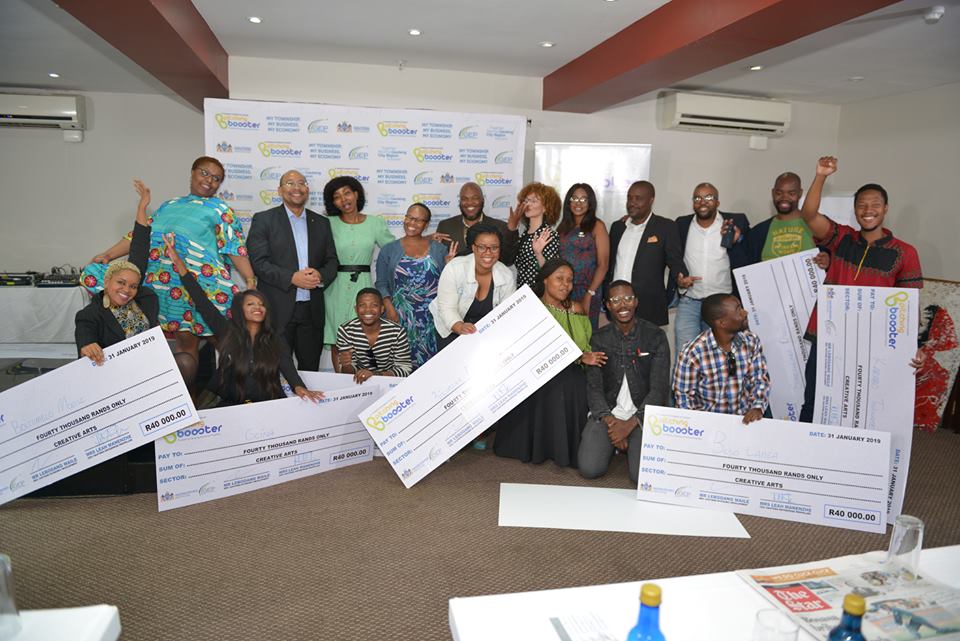
Gauteng Enterprise Propeller hosted the Pitching Booster Boot Camp targeting SMMEs in the creative industry, on 30 – 31 January 2019 at The Reef Hotel in Johannesburg. The two days’ Pitching Booster was attended by entrepreneurs such as visual artists, musicians, scriptwriters, authors, actors, DJs, producers and preforming artists.

The programme director Ms. Khanyisa Booi opened by introducing the guest speakers who gave words of encouragement to the entrepreneurs. To prepare for the pitching session, the entrepreneurs received coaching for two hours which provided a brief on what their presentation should be based on. The session further assisted them in identifying focus areas, by using techniques such as the SWOT analysis and business canvas model which is pivotal for any business. Thereafter, each participant was afforded an opportunity for three minutes to pitch their business idea. On the second day, only 30 candidates were shortlisted to present their ideas for the second time, this was followed by questions from the panel of judges.

The Acting CEO Mrs. Leah Manenzhe highlighted the need for more collaborations across sectors. She said it is important to build proper relationships amongst business people.

The winners for the Creative Art Pitching Boosters are:

  • Yolanda Mogatusi (1000 hugs Films);
  • Sinethemba dywili (Mvula ye Afrika);
  • Sakhile Cebekulu (Sash Studios),
  • Zilungile Kanye (Epilogue);
  • Beso Langa (Kgantsho Studios);
  • Boitumelo Modise (Melanated Entertainment);
  • Gcina Madida (Go Gina);
  • Karabo Thahane (Mkhonto Media);
  • Bendu Yende (HashtagCaptured) and;
  • Mpho Ntlatleng (OL Afrika Media Foundation).

The ten entrepreneurs won an equal share of R400 000.00, each participant took home R40 000.00. The prize money is to help them purchase equipment that are needed in their business.

A better life for all, not some

A better life for all, not some

By: Lebogang Maile

Following the recent controversy over Tshwane Mayor Solly Msimanga’s trip to Taiwan, which goes against the country’s international relations policy and position. the Democratic Alliance claimed that the trip was undertaken to attract investment and that the ANC was being critical because it doesn’t value job creating-investment in South Africa and in fact doesn’t care about the millions of jobless people in the country. This is not only disingenuous coming from the Democratic Alliance, but shows how little they understand and sympathise with the plight of our people.

In a speech he gave at the Wits Business School on the 19th of July 2016, IMF First Deputy Managing Director David Lipton highlighted that,” South Africa is grappling with growth that is too slow to raise average living standards, which is deeply problematic when one-third of the working population is effectively excluded from the economy. So far, there has been only limited progress on reforms to remedy that situation. What does this mean? The prospect of falling per capita income and increases in a jobless rate already among the world’s highest. That would spell tough times ahead, particularly given the difficulties facing the global economy. I know this is a blunt message. But anyone who admires South Africa’s many accomplishments has to worry about what it will mean if these economic problems are not tackled soon. Of course, some of these issues —particularly exclusion and income inequality — are legacies of the apartheid era. But with the passage of time, un-addressed issues can become obstacles.” The fundamental question that we need to ask ourselves when we look at the South African economy is: how can the distribution of wealth and control over the economy be changed in material terms so that it can be inclusive and create opportunity for all and not just an elite few. This is something that the DA has never been concerned about, despite its claims to care about unemployment within our country.

The truth of the matter is that we need to build an economy that is not just growing and creating jobs, but is also inclusive, giving opportunities to previously advantaged individuals and communities who make up the majority of the unemployed. Growth that is not inclusive is as undesirable as no growth at all. The DA, with its fundamentalist emphasis on free market economics doesn’t seem to have grasped the concept that markets, in and of themselves, are intrinsically skewed to historic privilege. The way markets are structured tends to lend itself to skewed wealth distribution which creates growing inequality. This is exacerbated by the oligopolistic nature of our economy, which has developed huge barriers to entry for new/smaller players that protect the interests of big conglomerates and locks out newcomers who are often the drivers of the innovation and enterprise that is required to grow an economy and create meaningful, dignified employment.

As the ANC government, our focus is on finding ways to intervene decisively so that we can reshape market outcomes to give opportunities to those who are disadvantaged and create an inclusive, growing, dynamic, modern economy that has mainstreamed and actualised the massive potential of the township economy.

It is for this reason, that as the Gauteng government we have put in place an Economic Plan with a focus on eleven specific sectors. This plan demonstrates that through these sectors and sub-sectors and decisive interventions across the five development corridors within the province, Gauteng can be radically transformed into a competitive, sustainable and inclusive economy. Our implementation of the Economic Plan is anchored by these economic sectors with emphasis on interventions along the following cross-cutting themes, in order to facilitate the achievement of our agenda to Transform, Modernise and Re-industrialise Gauteng:

  • Africa regional integration and development
  • Black ownership and control of the economy
  • Township economy revitalisation
  • Local production and beneficiation
  • Public/private procurement
  • Research and innovation
  • Skills development
  • Infrastructure investment to stimulate the economy
  • A focus on the green and blue economies

Through our interventions, we want to remove barriers to entry for SMMEs and township enterprises, create market access for SMMEs and township enterprises through collaborative partnerships with the private sector and other relevant stakeholders as well as boosting intra-Africa trade and investment, remove red tape and reduce the cost of doing business in order to stimulate investment, promote localisation of production (revive the manufacturing sector), give SMMEs and township enterprises greater access to finance and create infrastructure that will encourage innovation, entrepreneurship, job creation and economic growth that will be inclusive and equitable.

As Professor Simon Roberts, Professor of Economics and Director of the Centre for Competition, Regulation and Economic Development at UJ has previously stated, “meaningful access to economic opportunities through reducing barriers to entry and proactively supporting (small, new) rivals can play an important part in changing the structure of the economy.” This is what we are about as the ANC government as we pursue our objective of creating a better life for all our people, not just some who are in the minority. This is what the DA clearly does not and will never fathom with their adherence to laissez faire, neo-liberal economics.

Lebogang Maile is the Gauteng MEC for Economic Development, Environment, Agriculture and Rural Development